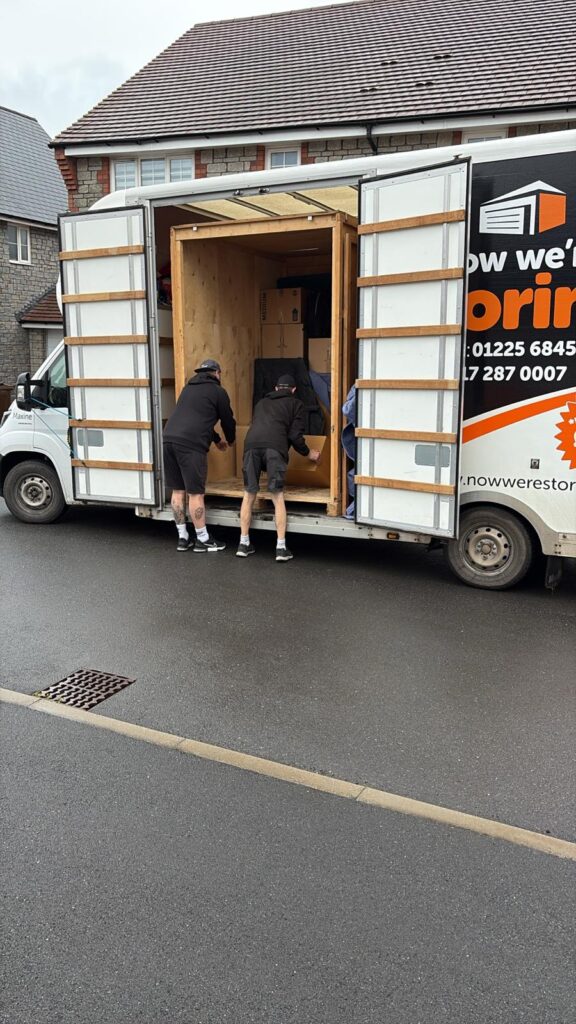
Yes, most portable hot tubs can be moved without dismantling the main shell, frame, plumbing or cabinet. However, the hot tub must be completely drained, safely disconnected from the electricity supply and prepared correctly before it can be lifted or transported.
Depending on the access route, the removal team may place the hot tub on its side, remove detachable accessories or temporarily take off selected cabinet panels. This is different from fully dismantling the hot tub.
The deciding factors are the hot tub’s size, construction, condition and location. A self-contained hot tub with clear side access may be moved in one piece, while a sunken hot tub surrounded by decking could require considerably more preparation.
What Does Dismantling a Hot Tub Mean?
Hot tub dismantling can refer to several different levels of work.
A removal team might detach small external parts without taking apart the main structure. This could include removing:
- Hot Tub Steps
- Cover Lifters
- Handrails
- Drinks Trays
- External Speakers
- Selected Cabinet Panels
- Loose Accessories
Removing these parts can protect them from damage and create additional clearance. It does not normally affect the shell, internal plumbing or supporting frame.
Complete dismantling is more substantial. It may involve separating the cabinet, cutting the frame or breaking the shell into smaller sections. This is normally associated with hot tub disposal rather than relocation.
When a hot tub is being moved for reuse, keeping its main structure intact is usually preferable.
Can Every Hot Tub Be Moved in One Piece?
Many portable hot tubs are designed as self-contained units, meaning the shell, pumps, controls, heating system and plumbing are contained within the spa. Although they are called portable spas, that does not mean they are light or easy to move. It means they can potentially be relocated, unlike a permanent spa built into a swimming pool or property. hot tub can be moved intact will depend on its type.
Acrylic hot tubs
Acrylic hot tubs are among the heaviest and most awkward models to move. The shell is usually attached to a supporting frame and surrounded by an insulated cabinet.
These hot tubs can often be moved without structural dismantling, but they require suitable handling equipment and enough space along the removal route.
Rotomoulded hot tubs
Rotomoulded models are generally constructed from moulded plastic. They can be lighter than traditional acrylic spas, although their size can still make them difficult to control.
They may be easier to relocate in one piece when access is straightforward.
Inflatable hot tubs
Inflatable hot tubs are designed to be drained and deflated. They do not normally require a specialist rigid hot tub removal, but they should be cleaned, dried and packed carefully to prevent mould or punctures.
Wooden hot tubs
The removal method depends on the construction. Some wooden hot tubs are built as complete units, while others may be assembled from individual sections.
Moving an older wooden tub intact may be risky if the timber or supporting structure has deteriorated.
Built-in or sunken hot tubs
Hot tubs installed into decking, patios or landscaped surrounds may not be immediately accessible. Deck boards, access panels or sections of the surrounding structure may need to be removed before the spa can be lifted.
The hot tub itself may remain intact, but the installation around it can require partial dismantling.
Does a Hot Tub Have to Be Drained Before Moving?
A hot tub must be fully drained before it is moved.
Even a relatively small spa holds a substantial volume of water. Manufacturer guidance shows that a small two-to-three-person hot tub may weigh roughly 500 pounds when empty but close to 3,000 pounds when filled. Larger models become considerably heavier when filled with water. ed hot tub would place enormous pressure on the shell, frame and lifting equipment. Water moving inside the spa would also make the load difficult to balance and control.
Jacuzzi recommends considering access to a suitable drain during installation because the tub will need to be emptied for maintenance or when moving becomes necessary. ld be completed before the removal team arrives unless the service specifically includes it. Follow the manufacturer’s instructions for your model, as the correct procedure can vary.
Do not assume that opening the main drain removes every drop. Water may remain in the pipework, pumps, jets and low points within the system.
Does the Electricity Need to Be Disconnected?
The electrical supply must be safely isolated before the hot tub is moved.
Some smaller plug-in models can be unplugged once the power has been switched off. Larger permanent installations may be hardwired into a dedicated electrical circuit.
A hardwired hot tub should be disconnected by a suitably qualified electrician. Do not attempt to cut, pull or detach electrical cables without understanding the installation.
Safe isolation is particularly important because electricity and residual water may both be present. General HSE guidance emphasises isolating electrical and other power supplies before maintenance or moving equipment. need an electrician at the destination to connect the hot tub to a compliant supply. The removal company may transport the unit, but this does not necessarily mean electrical disconnection and reconnection are included.
Can a Hot Tub Be Moved on Its Side?
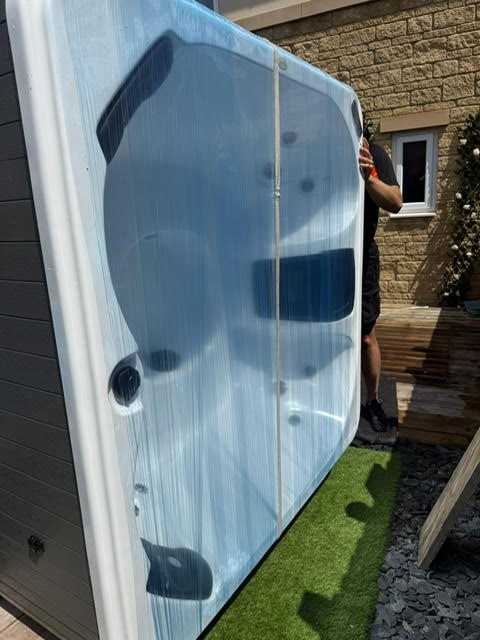
Many hot tubs can be moved on their side, provided the manufacturer permits it and the spa is supported correctly.
Hot tubs are commonly delivered sideways because the height of the cabinet is often narrower than its overall width. This can help the spa pass through gates and other restricted spaces. Manufacturer delivery guidance confirms that hot tubs are frequently transported on their side using suitable handling equipment. tub sideways is not the same as dismantling it. The complete unit remains together but is temporarily repositioned to make it easier to transport.
Before turning the spa, the team should consider:
- Which Side Can Safely Support the Weight
- The Position of Pumps and Control Equipment
- Vulnerable Cabinet Panels
- External Pipework or Fittings
- The Condition of the Frame
- The Manufacturer’s Handling Guidance
The shell should not simply be dragged across the ground. Suitable padding, boards, trolleys or specialist hot tub sledges may be needed to protect the cabinet and distribute the weight.
When Might Parts Need to Be Removed?
Minor components may need to be removed when they project beyond the main cabinet or could become damaged during handling.
A cover lifter is a common example. Leaving it attached can increase the overall width and create a vulnerable point while the hot tub is being turned or carried.
Steps, handrails and freestanding accessories should also be moved separately. These items may appear strong during normal use but are not necessarily designed to withstand lifting or sideways pressure.
Cabinet panels might be removed for one of three reasons:
- To Protect Them From Scratches or Cracks
- To Reach Safe Lifting Points
- To Reduce the Overall Dimensions Slightly
Removing a panel should be approached carefully. Older panels can become brittle, and incorrect removal could damage clips, screws or decorative finishes.
The removal team should not disconnect internal plumbing or mechanical components unless there is a clear reason and the work is carried out by someone familiar with the model.
How Much Access Is Needed?
Access is often more important than the hot tub itself.
Measure the complete route from the hot tub’s current position to the removal vehicle. Do not measure only the garden gate.
The access survey should include:
- Hot Tub Length, Width and Height
- Gate Width and Height
- Narrow Side Passages
- Sharp Corners
- Steps and Slopes
- Overhanging Branches
- Low Roofs or Guttering
- Garden Walls and Fences
- Loose Gravel or Soft Ground
- The Distance to the Vehicle
Remember that turning the hot tub onto its side changes which measurement must pass through the narrowest opening.
There must also be enough space to rotate the spa. A gate may technically be wide enough, but a wall immediately behind it could prevent the removal team from making the turn.
Photographs and videos of the route can help the company assess the move, but a survey may still be needed for restricted or unusual access.
When Is a Crane or HIAB Needed?
A crane or HIAB may be required when the hot tub cannot be carried through the available ground-level access.
This can happen when:
- The Garden Has No Suitable Side Access
- The Gate Is Too Narrow
- The Hot Tub Is Surrounded by Walls
- The Property Has Significant Level Changes
- The Spa Is Installed on a Raised Terrace
- The Available Corners Are Too Tight
- The Steps Are Too Steep for Safe Handling
Crane lifting can provide a practical solution when walls, low roofs, narrow entrances, steep access or other obstacles prevent the hot tub from being moved using a trolley.
The hot tub may be lifted over a wall, fence, garage or section of the property before being lowered onto a suitable vehicle or prepared base.
Before arranging a crane or HIAB lift, the removal company may need to assess:
- Overhead Cables
- Nearby Trees
- Road Access
- Parking Restrictions
- Ground Stability
- The Required Lifting Distance
- The Weight of the Hot Tub
- The Space Available for the Lifting Vehicle
A site survey may be required to determine whether the lift can be completed safely and what type of equipment will be needed.
Can Decking Prevent a Hot Tub From Being Removed?
Decking is one of the most common complications during a hot tub removal.
A hot tub sitting directly on top of an open deck may be relatively accessible. Problems are more likely when the spa has been recessed into the structure or the decking has been built tightly around its cabinet.
The removal team needs enough exposed surface to attach lifting equipment and control the spa. They may also require access to the electrical connection, drainage point and equipment compartment.
Sections of decking may need to be removed when:
- The Cabinet Cannot Be Reached
- There Is No Space for Lifting Straps
- The Hot Tub Cannot Be Raised Vertically
- The Surround Blocks Sideways Movement
- The Equipment Compartment Is Inaccessible
Do not begin removing decking until the lifting method has been agreed. Taking out the wrong boards may create extra work without providing the clearance the team needs.
Can an Old or Damaged Hot Tub Be Moved Intact?
The condition of the hot tub must be considered before lifting it.
Exposure to weather, moisture and ground movement can weaken the cabinet or frame over time. A hot tub that appears sound while resting on a base may flex or deteriorate when lifted.
Warning signs include:
- Rotten Timber
- Cracked Cabinet Panels
- A Distorted Base
- Previous Plumbing Leaks
- Visible Shell Cracks
- Loose Corners
- Significant Rust
- Damage From Frost
Moving a damaged spa intact could make existing defects worse. The shell may crack, the frame could twist or weakened cabinet sections may collapse under pressure.
A professional assessment can determine whether the hot tub is suitable for relocation. If it is no longer safe or economical to reuse, dismantling it for disposal may be the better option.
What Equipment Is Used for Hot Tub Removal?
The equipment required depends on the hot tub, access and final lifting method.
A straightforward move may involve:
- Heavy-Duty Dollies
- Specialist Spa Trolleys
- Moving Straps
- Protective Blankets
- Plywood or Protective Boards
- Ramps
- Low-Friction Moving Sheets
- Vehicle Loading Equipment
Hot tub manufacturers describe dollies and slip sheets as common handling methods for moving spas, with cranes used when access prevents ground-level movement. must be suitable for the hot tub’s empty weight and dimensions. An ordinary household sack truck is unlikely to provide adequate support for a large spa.
The team must also protect the route. Boards may be needed over soft lawns, gravel or vulnerable paving to create a stable moving surface.
Should You Move a Hot Tub Yourself?
Moving a small lightweight spa may appear manageable, but the risks increase quickly with rigid acrylic hot tubs.
The difficulty is not only lifting the weight. The team must keep the load balanced while turning it, passing through gates, crossing uneven ground and loading it onto a vehicle.
A sudden shift could damage the hot tub, surrounding property or the people helping with the move.
There may also be warranty considerations. Some manufacturers warn that moving a spa yourself could affect an existing warranty, particularly when damage results from incorrect handling. ting the move, check:
- The Manufacturer’s Instructions
- The Empty Weight
- The Available Access
- The Required Equipment
- The Number of People Needed
- Insurance Arrangements
- Warranty Conditions
- Electrical Disconnection Requirements
For a valuable, large or awkwardly positioned hot tub, a professional hot tub removal service will usually be the safer option.
How Should You Prepare for Hot Tub Removal?
Begin preparing several days before the planned move.
Check the weather forecast and avoid draining water onto ground that could become soft or unstable. Make sure the water can be discharged safely without flooding neighbouring land, damaging planting or creating slippery surfaces.
Remove loose items from the area and clear the complete route. Trim back branches where necessary and arrange temporary removal of gates or fence panels if this has been agreed.
Before the move:
- Confirm the Hot Tub Make and Model
- Find the Manufacturer’s Manual
- Measure the Spa and Access Route
- Drain the Water Correctly
- Arrange Electrical Disconnection
- Remove Loose Accessories
- Photograph the Hot Tub’s Condition
- Clear the Working Area
- Reserve Suitable Parking
- Prepare the Destination Base
The new base must be ready before delivery. It should be level, stable and suitable for the filled weight of the hot tub.
What Affects the Cost of Moving a Hot Tub?
A hot tub removal quote will usually reflect the amount of labour, equipment and planning involved.
Important factors include:
- Hot Tub Size and Empty Weight
- Collection and Delivery Distance
- Number of People Required
- Access at Both Properties
- Steps and Level Changes
- Decking or Landscaping
- Crane or HIAB Requirements
- Electrical Work
- Removal of Gates or Fencing
- Storage Requirements
- Repositioning at the Destination
A hot tub that can be moved intact along a clear, level route should usually be simpler than one recessed into decking or located behind a terraced property with no side access.
Provide accurate photographs and measurements when requesting a quote. Unexpected access problems can delay the work and change the equipment required.
Is Dismantling Better for Disposal?
If the hot tub is being removed permanently and will not be reused, dismantling may be the most practical approach.
Breaking the spa into manageable sections can avoid the need for specialist lifting equipment. It may also allow the waste to pass through narrow doorways or side passages.
However, dismantling a hot tub involves sharp materials, electrical components, insulation, pipework and a potentially reinforced shell. It should not be approached as ordinary household furniture disposal.
The waste must also be transported and handled responsibly. Check whether the removal service includes loading, disposal and any necessary waste charges.
A reusable hot tub should normally be moved intact. A damaged hot tub intended for disposal may be dismantled when complete removal is impractical.
Can Your Hot Tub Be Moved Without Dismantling?
Most portable hot tubs can be moved without dismantling the shell, cabinet, frame or plumbing. They are normally drained, electrically disconnected, protected and moved as a complete unit, often while positioned on their side.
Some detachable accessories or cabinet panels may still need to be removed. A crane or HIAB could also be required when walls, decking, restricted access or changes in ground level prevent an ordinary ground-level removal.
The most important step is assessing the route before moving day. Accurate measurements, clear photographs and information about the hot tub’s make, model and condition will help determine whether it can be moved intact.
Keeping the hot tub together is often the best approach when it will be reused. Complete dismantling is more commonly reserved for old, damaged or unwanted hot tubs being removed for disposal.